
 " alt="Bali Villa Design Trends: The Evolution of Tropical Luxury">
Bali villa design is becoming more diverse.
We are no longer seeing only one tropical style.
In 2026, villa owners are mixing global design influences with Bali’s climate, materials, and lifestyle.
Some styles feel raw and natural.
Others feel bright, minimal, or highly sculptural.
Here are the villa design trends we see shaping Bali in 2026.
Wabi-Sabi
Wabi-Sabi focuses on simplicity, imperfection, and natural ageing.
We use textured walls, unfinished stone, warm timber, and handmade details.
The spaces feel calm and honest.
Nothing looks overly polished.
This style works well in Bali because it blends easily with tropical landscapes and natural materials.
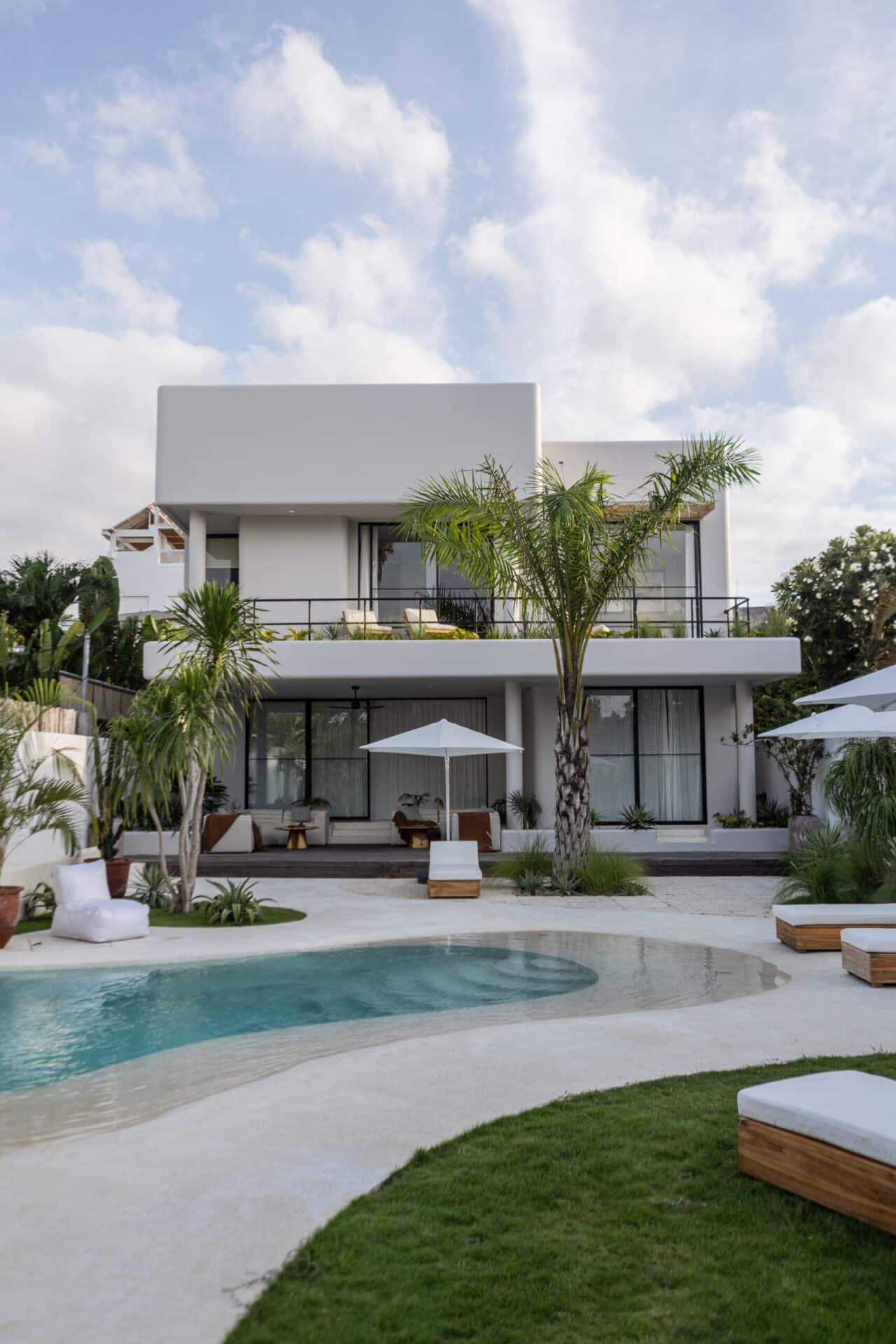
Mediterranean
Mediterranean villas remain very popular across Bali.
The style is known for white walls, soft curves, arches, and earthy colours.
We often combine it with limestone, terracotta, and light timber.
The result feels bright, relaxed, and suitable for warm weather.
It is especially popular in areas such as Canggu, Uluwatu, and Pererenan.
Bamboo Architecture
Bamboo continues to define some of Bali’s most distinctive homes.
It is flexible, natural, and visually striking.
We use it for roofs, ceilings, structural elements, screens, and decorative details.
Bamboo villas feel open and closely connected to nature.
The style also supports a more sustainable approach when designed and treated correctly.
Tropical Modern
Tropical modern design combines clean architecture with Bali’s outdoor lifestyle.
We use simple forms, large openings, deep roof overhangs, and natural ventilation.
The interiors are usually minimal.
The materials remain warm and tropical.
This style is ideal for owners who want a modern home without losing the Bali atmosphere.
Brutalist Tropical
Brutalist villas are becoming more visible in Bali.
The style uses strong forms, exposed concrete, deep shadows, and minimal decoration.
In Bali, we soften the look with greenery, timber, water features, and open courtyards.
The contrast creates a bold but comfortable home.
It feels architectural, private, and highly contemporary.
Japandi
Japandi combines Japanese simplicity with Scandinavian warmth.
We use clean lines, neutral colours, low furniture, and natural textures.
The spaces feel organised and peaceful.
This style is well suited to smaller villas because it avoids visual clutter.
It also creates a calm residential atmosphere that works well for long-term living.
Contemporary Balinese
Contemporary Balinese design updates traditional local architecture for modern life.
We may use pitched roofs, local stone, carved details, courtyards, and timber structures.
The layout is usually cleaner and more open than a traditional compound.
This allows us to keep a sense of place without making the home feel old-fashioned.
It is a strong choice for owners who want a villa that still feels connected to Bali.
Choosing the Right Villa Style
There is no single Bali villa look anymore.
The best style depends on the location, land size, budget, and target market.
A Wabi-Sabi villa may suit a quiet residential area.
A Mediterranean villa may appeal to the holiday rental market.
A bamboo or contemporary Balinese home may create a stronger connection to the island.
We believe the strongest villas are not simple copies of a trend.
They combine the right style with practical planning, climate response, and long-term comfort.