
 " alt="Natural Textures and Handcrafted Pieces: Inside the Amara Project">
Some spaces are designed to impress. Others are designed to be lived in.
Amara belongs to the second kind. Warm woods, woven textures, and handcrafted pieces come together here without ever feeling staged. Nothing shouts for attention. Everything simply belongs.
This is the atmosphere our team set out to build for Amara, a space where every element was selected, and in many cases designed, to feel like it grew out of the room rather than being placed into it.
Furniture That Doesn’t Try Too Hard
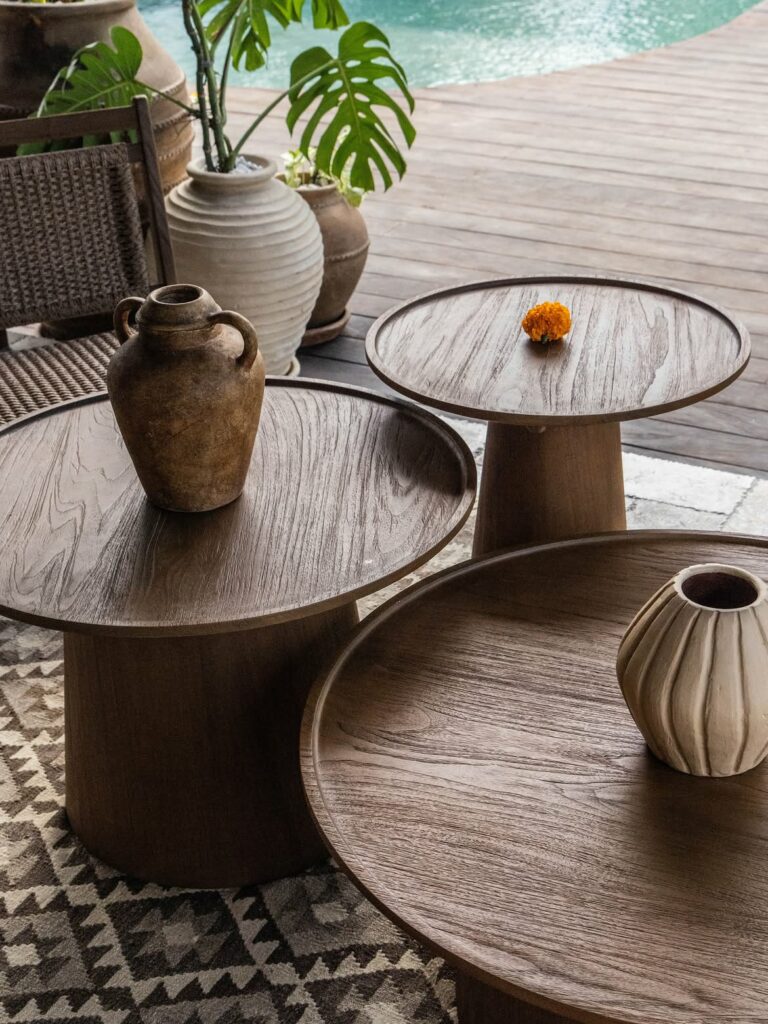
Walk through Amara’s lounge area and you’ll find low rattan armchairs, pedestal-style wooden side tables, and a scatter of aged clay vessels, pieces that feel collected over time rather than sourced for a single project.
The round wooden coffee tables are a good example. Their pedestal bases and softly rounded edges give them a sculptural quality on their own, but grouped together at different heights, they start to feel almost conversational, like they’ve been arranged and rearranged by hand, not measured out on a floor plan.
That’s a deliberate choice. Furniture with a little irregularity in it tends to feel more alive in a room. A design approach that leans into natural wear and organic form is often described as wabi-sabi, a philosophy that finds more warmth in a piece with visible grain and a little asymmetry than in something flawlessly uniform.
Handcrafted Details, Layered In
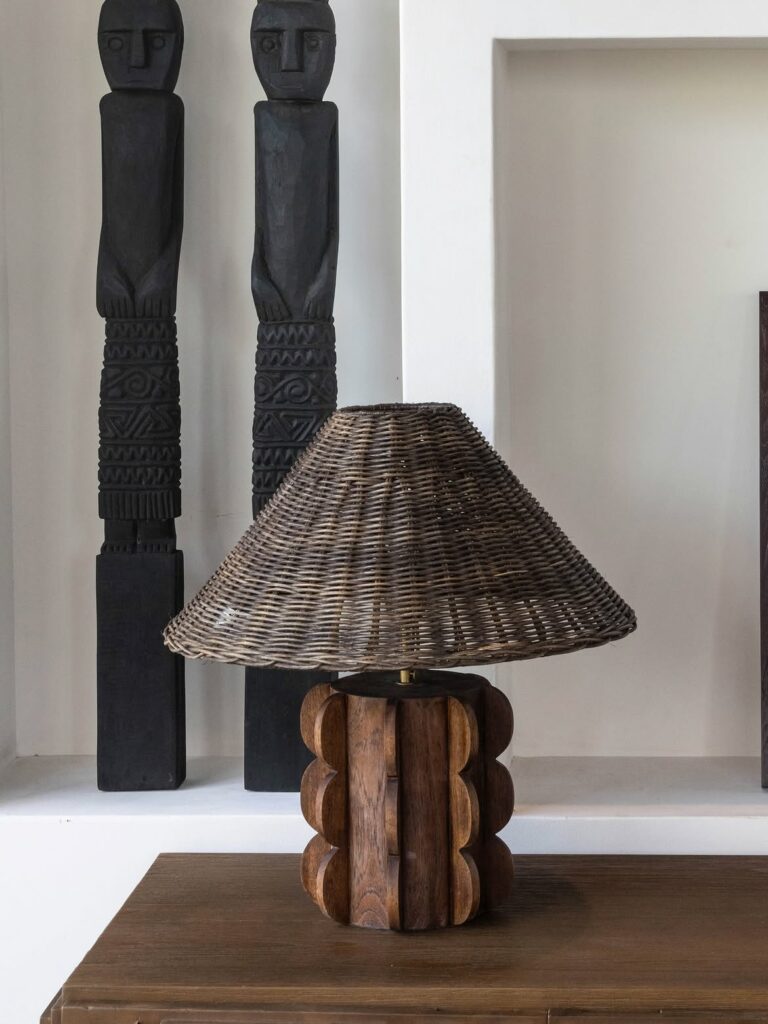
Look closer and Amara reveals itself in the details. A woven rattan lampshade sits atop a scalloped wooden base. Aged ceramic jars, in varying shapes and finishes, cluster together like they’ve been gathered from different corners of the island. A pair of dark carved wooden figures stands quietly in a wall niche, adding a note of history to an otherwise contemporary room.
None of these pieces were chosen simply to fill space. Each one adds a layer of texture. Rough against smooth, dark against light, woven against solid. Building a room that rewards a slower look.
Where Indoors Meets the Garden
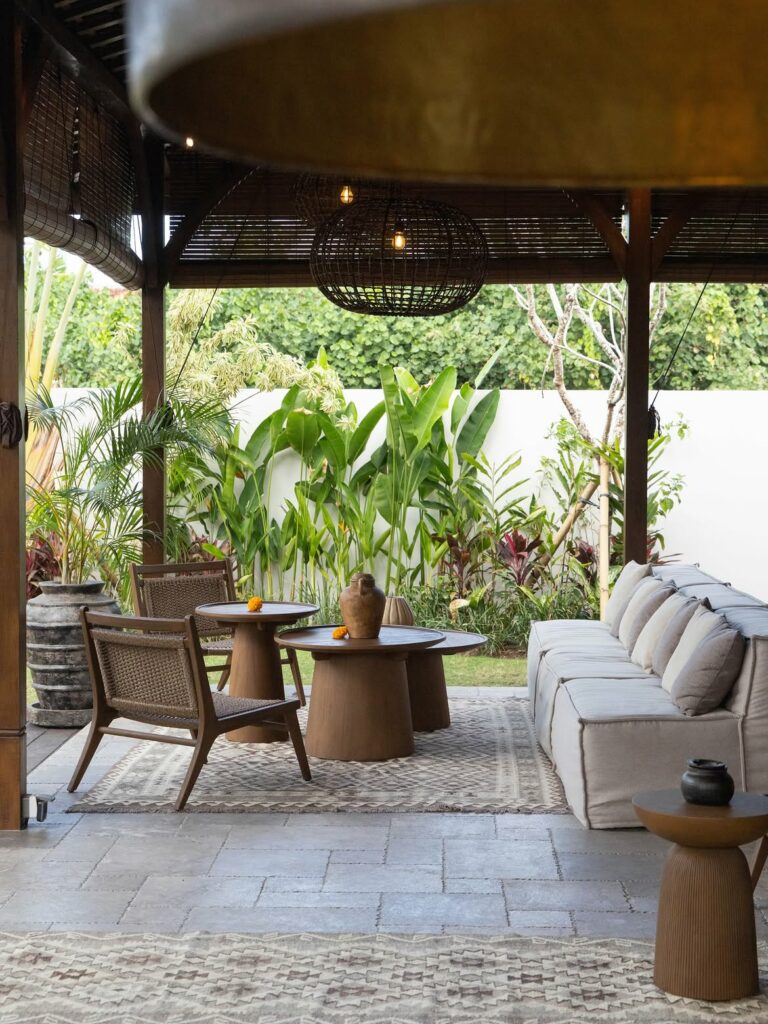
Much of Amara’s atmosphere comes from how openly it connects to what’s outside. Deep verandas, timber-slat shading, and sightlines straight through to banana leaves and tropical planting mean the interior never feels sealed off from its surroundings.
It’s an approach that runs through a lot of Bali’s best architecture rooms built to breathe with the garden around them, rather than shut it out. The materials inside echo that connection: warm timber, natural fiber, aged clay, all things that feel like they came from the same landscape as the plants just beyond the veranda.
A Space Built Slowly, on Purpose
What we like most about Amara is that it doesn’t feel finished in the polished, showroom sense. It feels settled. Like a space that’s already lived a little.
That’s really how most of our work comes together at Paz Studio Bali: piece by piece, texture by texture, until a room stops looking designed and starts looking like it was always meant to be that way.
If that’s the kind of atmosphere you’re hoping to build, our team behind interior design and architecture in Bali would love to hear about your space.
Amara project by @paz_studio_bali.