
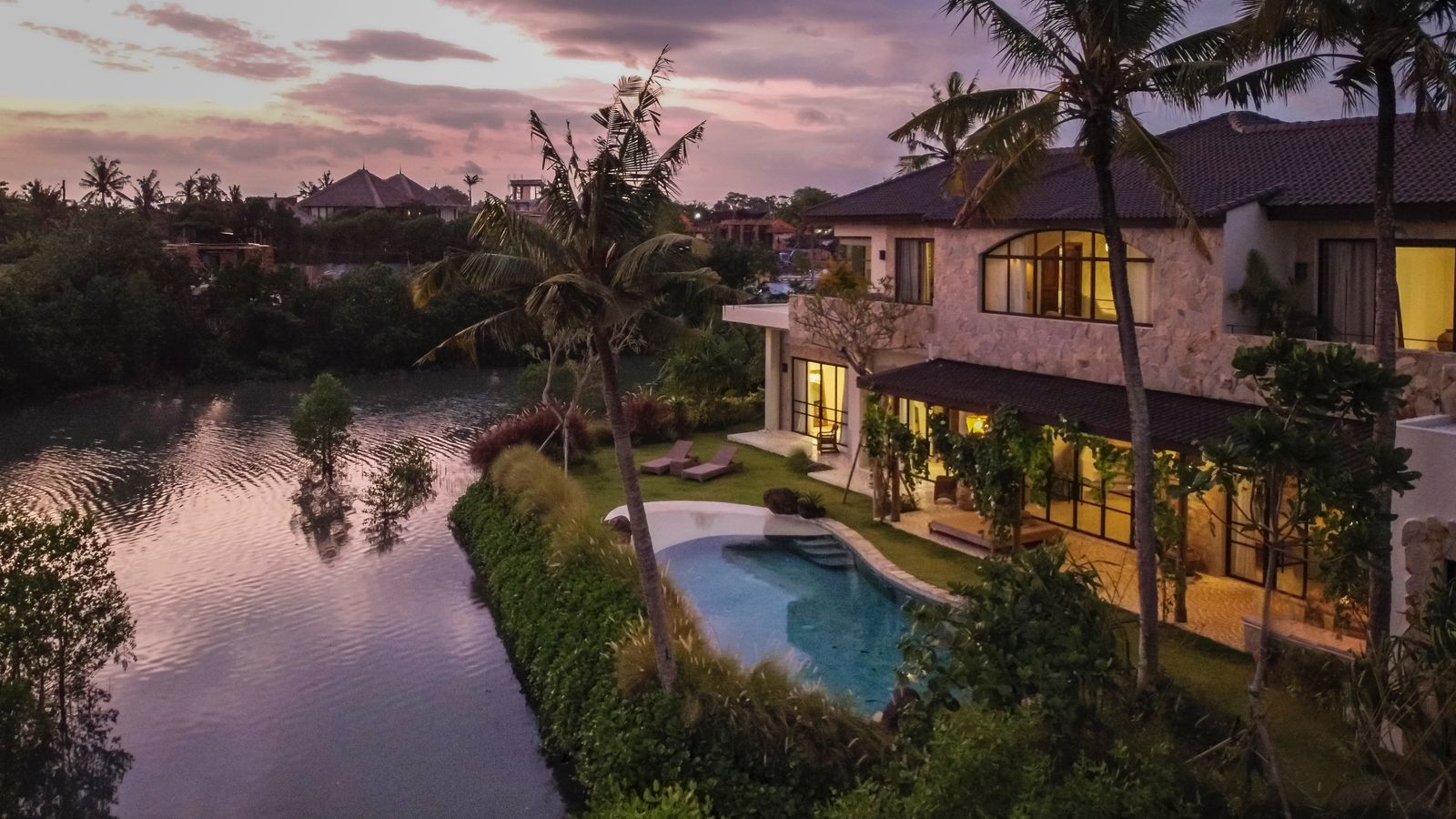
Building a villa in Bali needs three approvals, in this order: confirmation that the land’s zoning allows what you want to build (KKPR), the building approval (PBG) before construction starts, and the certificate that the finished building is fit for use (SLF). Most delays come from doing them out of order, or from designing before anyone has checked the land.
Each approval involves different people. Your lawyer and notary deal with the land, engineers sign the technical drawings, a permit consultant usually files the application, and your architect shapes the design so it passes.
This is general information based on regulations and sources published in 2025 and 2026, not legal advice. Each regency applies the rules in its own way and they change often, so confirm the details for your parcel with a licensed professional.
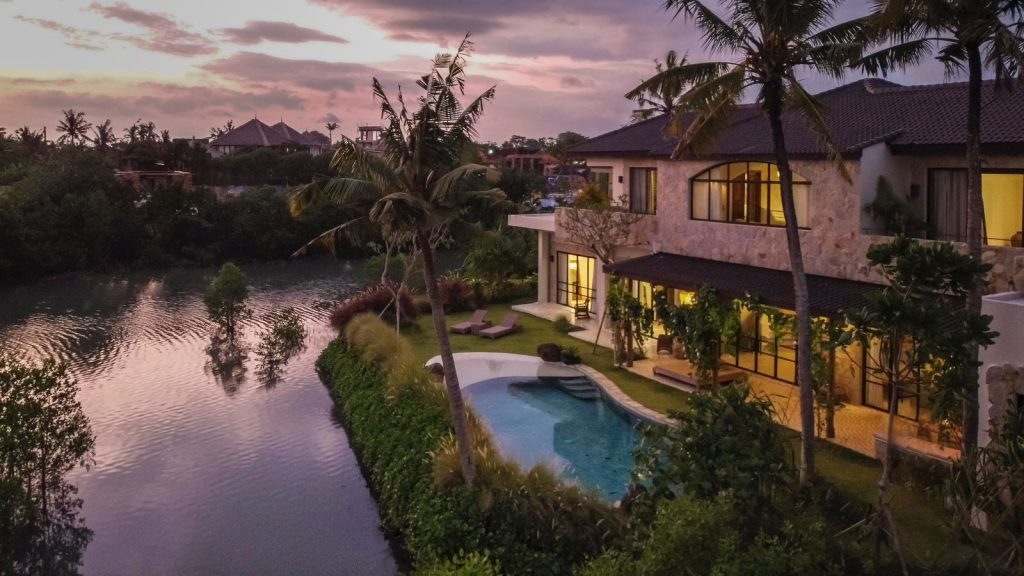
The short answer
| Approval | What it confirms | When |
|---|---|---|
| KKPR (Kesesuaian Kegiatan Pemanfaatan Ruang) | The land’s zoning allows your intended use, for example a house or tourism accommodation | Before design is finalised |
| PBG (Persetujuan Bangunan Gedung) | The building design meets technical and spatial standards | Before construction starts |
| SLF (Sertifikat Laik Fungsi) | The finished building matches the approval and is safe to use | When construction is complete, before the villa is used |
The PBG replaced the old IMB building permit in 2021, under Government Regulation (PP) 16/2021. An IMB issued before then generally stays valid as long as the building is not changed.
1. Land and zoning come first
Before anyone draws a plan, check the land title. It shows who holds the land and on what basis: freehold (SHM), a right to build (HGB), or a notarised lease. That decides who can apply for the permits later.
Then check the zoning. Every parcel sits in a zone of the regency’s spatial plan, and the KKPR confirms that your intended use fits that zone. You apply through the government’s OSS system. Where a detailed zoning plan (RDTR) is already loaded into OSS, confirmation can be quick; elsewhere the application goes through a formal assessment.
Zoning also tells you how much of the plot you can build on, how far you must stay from the road, a river or the neighbours, and whether a rental villa is allowed there or only a private house.
A note on farmland
After deadly floods in September 2025, Bali’s governor instructed the regencies to stop converting productive farmland to commercial use, and new permits for hotels, restaurants and tourism accommodation on agricultural land have been restricted since. Reports differ on how this applies in each regency, and on whether it covers private villas as well as hotels. If your land is, or was, a rice field, check its current zoning and status with your notary before you buy or sign a lease.
2. Design within the rules
The architect’s job at this stage is to build the zoning rules into the design from the first sketch, because every change after submission costs time in review. The design has to respect:
- how much of the plot the buildings may cover, and how much must stay open as green space
- the minimum distances from roads, rivers, beaches and boundaries
- the height limit: Bali’s provincial rule has long capped most buildings at 15 metres, often described as no taller than a coconut tree
- the building’s use and class, since a family home and a villa run as a rental are not always assessed the same way
- local character, as Bali’s regulations ask new buildings to follow Balinese building traditions, and some sites are checked more closely than others
On our architecture projects, such as Villa Rimba and Villa Kajano, we fix the layout and the main dimensions before the permit drawings are prepared. Changing a plan after submission usually means changing the application too.
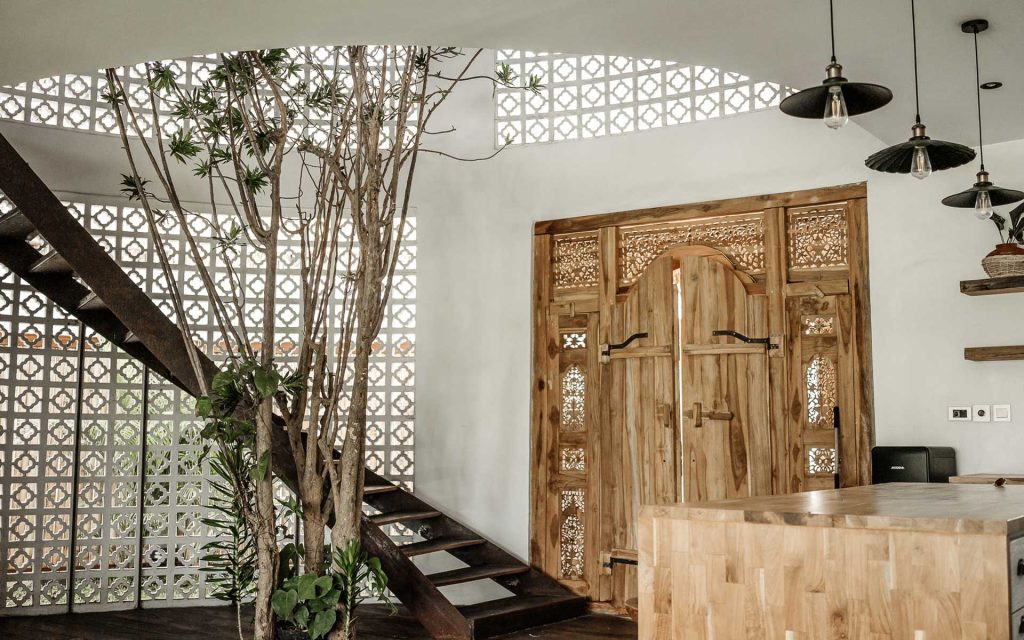
3. The PBG application
You apply for the PBG online through SIMBG, the national building-approval system. A typical file includes:
- proof of land rights (certificate or notarised lease) and the applicant’s identity or company documents
- the KKPR
- architectural, structural and MEP (mechanical, electrical and plumbing) drawings, signed by licensed professionals
- a soil investigation report
- an environmental document, which for most single villas is a simple statement, with fuller assessments for larger sites
A panel of technical experts (the TPA) reviews the drawings and may ask for changes. Once they accept the design, the regency issues a levy (retribusi) based on the floor area, height, function and class of the building, and the PBG follows after payment. Each regency sets its own rates.
Once a complete file is in SIMBG, consultants commonly quote 14 to 30 working days for the review. From the zoning check to an issued PBG, including soil tests and drawings, plan on three to four months. Missing documents are a common cause of delay.
4. Construction and the SLF
The contractor builds to the approved drawings. A change on site that alters the structure, floor area, height or use has to go back through the approval, so settle those questions during design.
Near the end of construction you apply for the SLF, again through SIMBG, with the approved PBG, as-built drawings, photos, and test certificates for the structure and services. An inspector checks that the building matches what was approved. The SLF is commonly cited as valid for 20 years for a single house and 5 years for other buildings, and a villa run commercially may fall in the second group, depending on how it is classed.
If you plan to rent the villa out, you will generally need the SLF for the tourism licence.
Can a foreigner apply?
Not in their own name on a personal lease. Usually either an Indonesian company with foreign shareholding (PT PMA) holds the land rights and applies in its own name, or the Indonesian landowner applies with your lease in place. The right route depends on how you hold the land and what you plan to do with the villa, so settle it with your lawyer before the design starts.
What happens if you build without a PBG
Regencies can stop the works, seal the site, impose fines and, in serious cases, order demolition. A building without approvals is also hard to license, insure, finance or sell.
Who does what
| Who | Their part |
|---|---|
| You | The brief, the budget, and decisions on time |
| Lawyer and notary | Title checks, the lease or company structure, and who will be the applicant |
| Architect | A design that fits the zoning, the architectural drawings, and coordinating the other consultants’ drawings into one package |
| Structural and MEP engineers | Calculations and signed engineering drawings |
| Permit consultant | Preparing and submitting the SIMBG file and following it through review |
| Contractor | Building to the approved drawings and supplying what the SLF needs at the end |
As an interior design studio in Bali that also designs architecture, we work on both the building and its interiors, and we provide and coordinate the architectural information the permit consultant needs. Licensed consultants or your legal team make the permit submissions. Our villa design process guide shows where the permits sit in the wider timeline.
A realistic timeline
| Stage | Indicative time |
|---|---|
| Title and zoning checks, KKPR | A few weeks, longer if a formal assessment is needed |
| Concept and design development | About 2 to 3 months |
| Soil test, engineering and permit drawings | Alongside the end of design |
| PBG review in SIMBG | Around 14 to 30 working days for a complete file |
| Construction | Depends on size and scope |
| SLF | Applied for near completion, issued after inspection |
Frequently asked questions
Do I need a PBG to renovate an existing villa?
Yes, if the renovation changes the structure, floor area, height or use of the building; the approval then needs updating. An interior refurbishment that leaves those alone generally does not need one, but check with your consultant before work starts.
My villa has an old IMB. Is it still valid?
Generally yes, as long as the building has not been changed. Extending or converting it means applying for a PBG.
Can I build a villa on a rice field?
Only if the zoning allows it, and since 2025 Bali has been restricting the conversion of productive farmland for commercial use. Check the parcel’s current zoning before you commit to the land.
Does my architect submit the permits?
That depends on the studio. Often the architect prepares the architectural drawings and coordinates the package, and a licensed permit consultant handles the SIMBG submission. Agree who does what before you start, so nothing falls between the two.
Planning a villa?
Book a call and we can go through your site, its zoning and what the design will need to allow for.